Forty-one photos of the same big toenail live in one folder on my phone, framed the same way every time, and for a long stretch they told me almost nothing. Nobody warns you about that part when they say to just track it. The photos pile up fast, but reading them accurately turns out to be a separate skill from whatever you're actually doing to the nail itself.
A yellowish patch under my big toe is the reason that folder exists. Teaching barefoot yoga six days a week means there's no hiding a toenail from a room of students who spend half the class two feet from your feet, adjusting their own stance by watching yours. What I wanted was a fast fix. What I got, eventually, was a slower education in how real nail recovery actually shows up, and how different that is from what a single before-and-after photo implies.
What a Yellow Toenail Actually Tells You
Discoloration under a nail isn't one thing. Some of it starts as trauma, like a stubbed toe or a dropped yoga block that bruises the nail bed months before any color shows up, and some of it is fungal, caused by organisms called dermatophytes. The two don't always look the same up close. What I can tell you, from staring at my own toe more than is probably healthy, is that the question "is this working" only makes sense once you've figured out what you're actually looking at.
When to Stop What Isn't Working
Apple cider vinegar soaks were my big disappointment: twenty minutes every morning, feet in a basin before I'd even had coffee, for long enough that I should have seen some change if one were coming. Nothing did. I ran into my trail-running friend Beckett at the Multnomah Village farmers market around then, and he asked, with the kind of optimism he applies to every injury regardless of the facts, whether the vinegar had "turned a corner yet." It hadn't. At some point you have to admit a routine isn't a treatment, it's a ritual, and those aren't the same thing. One is meant to change something, the other just makes you feel like you're doing something.
Honestly, diet got more of my attention after that. Not because a handful of nuts fixes a nail overnight, but because keratin is a protein the body has to build from somewhere, and a vinegar basin every morning was never going to supply it.
The Environment Question I Didn't Ask Soon Enough
Wiping down my mat every day felt like it should have been enough, and for a long time I assumed mat hygiene was the whole environment story. It isn't. What's inside your shoes between classes, how long feet stay damp after a shower before socks go back on, whatever's sitting unaired in a gym bag, all of that matters just as much as anything touching a yoga mat. I didn't connect those dots until well after I'd started paying attention, which is its own kind of lesson about where to actually look.
Does It Move With the Nail, or Does It Just Sit There?
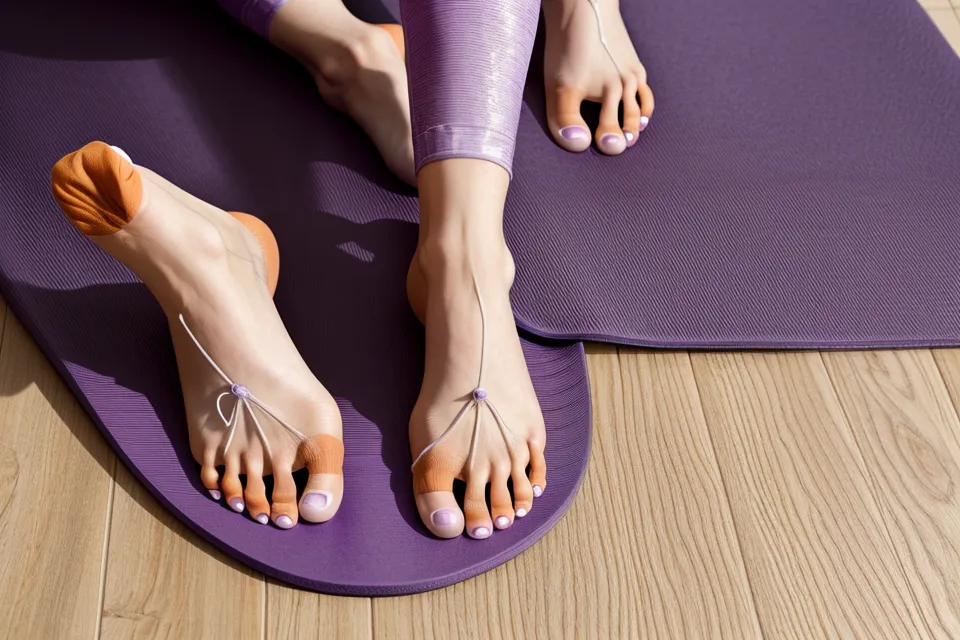
Here's the test that matters most to me now. A mark that's actually resolving travels as it gets carried toward the tip as new nail comes in behind it, the same way an old water stain creeps up a windowsill no matter how often you wipe the sill itself. A mark that stays anchored in the same spot on the nail bed, photo after photo, usually means whatever caused it is still active underneath, regardless of what's been applied on top. That single distinction mattered more to me than any product I tried, because it's the difference between "this is resolving on its own schedule" and "this isn't resolving at all."
Trust the Texture, Not the Photo
The clearest proof I've gotten wasn't a photo at all. It was an ordinary morning with a base coat, where the brush went on smooth, no catching, no ridge telegraphing through the polish the way one used to show up every time. A camera would have caught the color fine, but it wouldn't have caught that the surface itself had changed under the brush, which told me more than any stretch of side-by-side images ever did. Texture is information a photo flattens out.
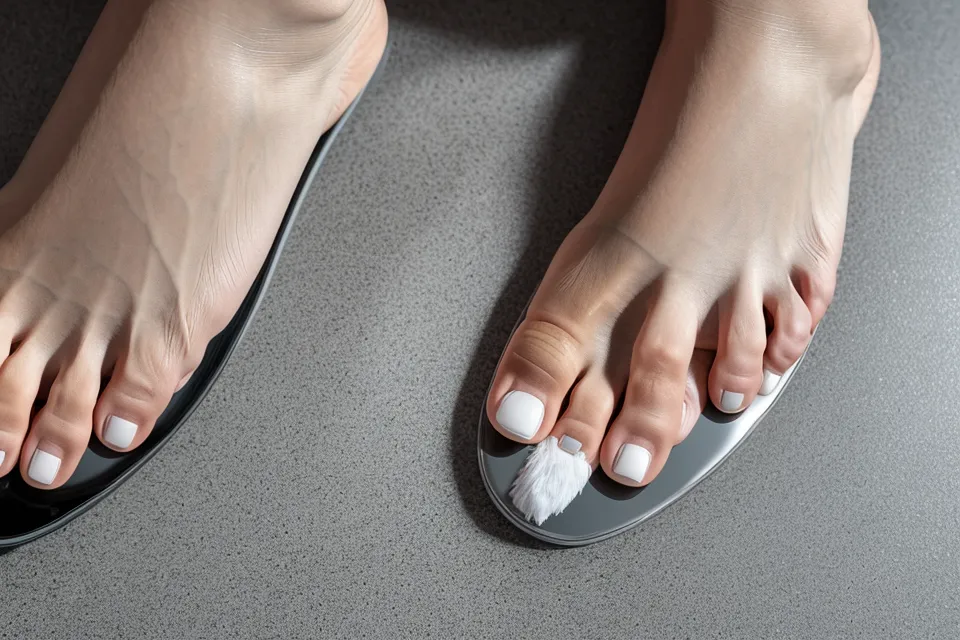
None of this makes for a tidy before-and-after. What it gives you instead is a handful of criteria that don't rely on wishful thinking: whether a mark is moving or stuck, whether the surface feels different under a brush, whether you're still doing a routine out of hope or because it's actually doing something, and whether you've looked past the mat to footwear and gym bags instead of stopping there. Stack those up and you get a far more honest answer than any single photo will give you.
I wrote about the earlier, messier version of figuring this out in my barefoot journey tracking what actually works for stubborn toenails, back when I was still trying things mostly at random. These days the log on my phone is less about hope and more about evidence, and I keep adding to it in The Barefoot Teacher's Log, one unglamorous entry at a time.